
Kidney stones are a common problem that affects many people today. These stones are hard deposits formed from minerals and salts inside the kidneys. Kidney stones can be very painful, especially when they start moving through the urinary tract. Patients often experience sharp pain in the lower back or side, burning while urinating, nausea, vomiting, and sometimes blood in urine.
Laser treatment of kidney stones is one of the most effective and modern ways to remove stones safely. This treatment offers quick relief from pain and helps patients recover faster compared to traditional surgical methods.
Causes of Kidney Stones
Kidney stones usually form when urine becomes concentrated and minerals start sticking together. Common reasons include low water intake, high salt consumption, excessive protein in diet, obesity, and certain medical conditions. Some people may also develop kidney stones due to family history.
Ignoring early symptoms can make the condition worse. That is why timely diagnosis and treatment are very important.
What Is Laser Treatment for Kidney Stones?
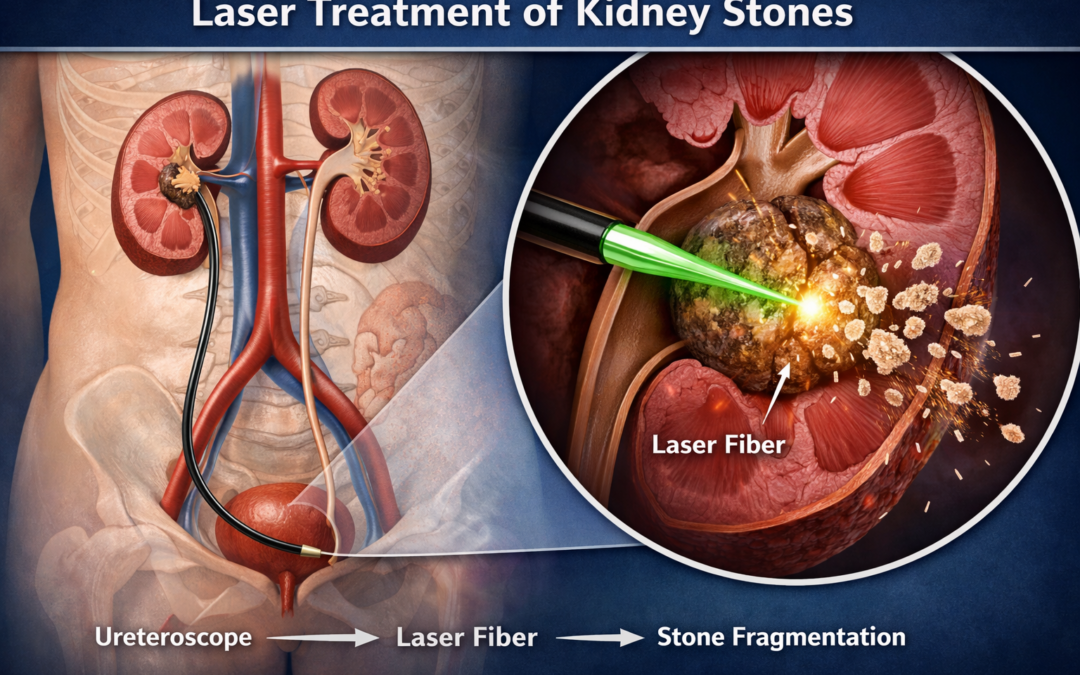
Laser treatment is a minimally invasive procedure used to break kidney stones into very small pieces. During the procedure, a thin instrument called a ureteroscope is passed through the urinary passage to reach the stone. A laser is then used to break the stone into tiny fragments.
These fragments either pass naturally through urine or are removed during the procedure. The laser is highly precise and does not damage nearby tissues.
Who Needs Laser Treatment?
Laser treatment is recommended when kidney stones do not pass naturally or cause repeated pain, infection, or blockage. It is suitable for stones located in the kidney or ureter and works well for different stone sizes.
Patients who want a less painful procedure with faster recovery often choose laser treatment.
Benefits of Laser Treatment
One of the biggest advantages of laser treatment is that it does not require any cuts or stitches. The procedure is done through natural urinary pathways, reducing the risk of infection.
Other benefits include minimal pain, short hospital stay, quick recovery, and high success rate. Most patients can return to daily activities within a few days.
Procedure and Recovery
Laser treatment is performed under anesthesia and usually takes between 30 to 90 minutes. In some cases, a temporary stent is placed to help urine flow smoothly after the procedure.
After treatment, patients may feel mild discomfort or burning while urinating for a short time. Drinking plenty of water helps flush out stone fragments and speeds up recovery.
Dr. Kumar Saurav is experienced in managing kidney stone cases and provides laser treatment with a patient-focused approach to ensure safe and effective results.
Preventing Kidney Stones in the Future
Preventing kidney stones is as important as treating them. Patients are advised to drink enough water daily, reduce salt intake, and follow a balanced diet. Regular follow-ups help monitor kidney health and reduce the chances of stone recurrence.
Laser treatment of kidney stones is a reliable and modern solution that helps patients get long-term relief and return to a pain-free life.